What it is
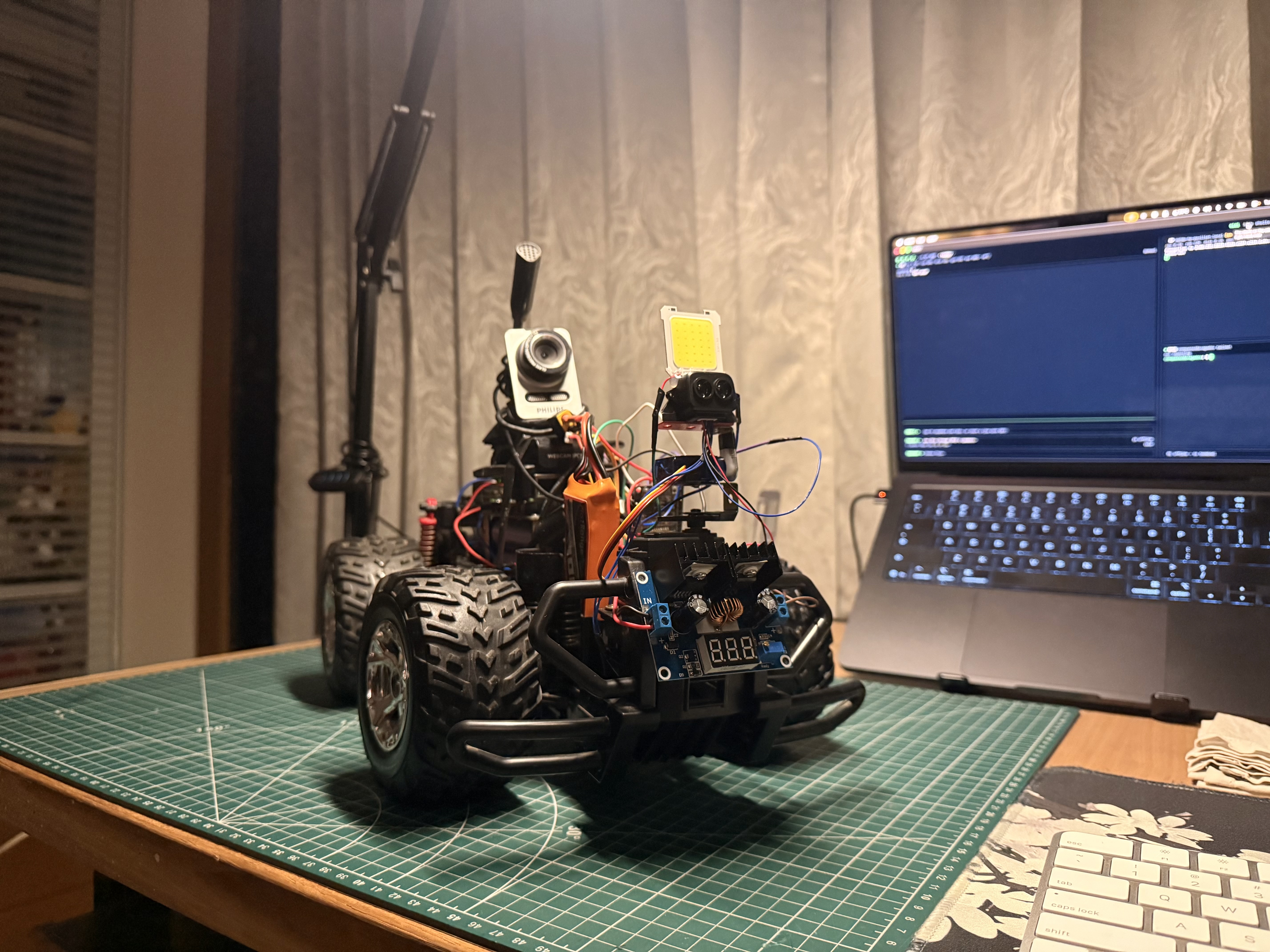
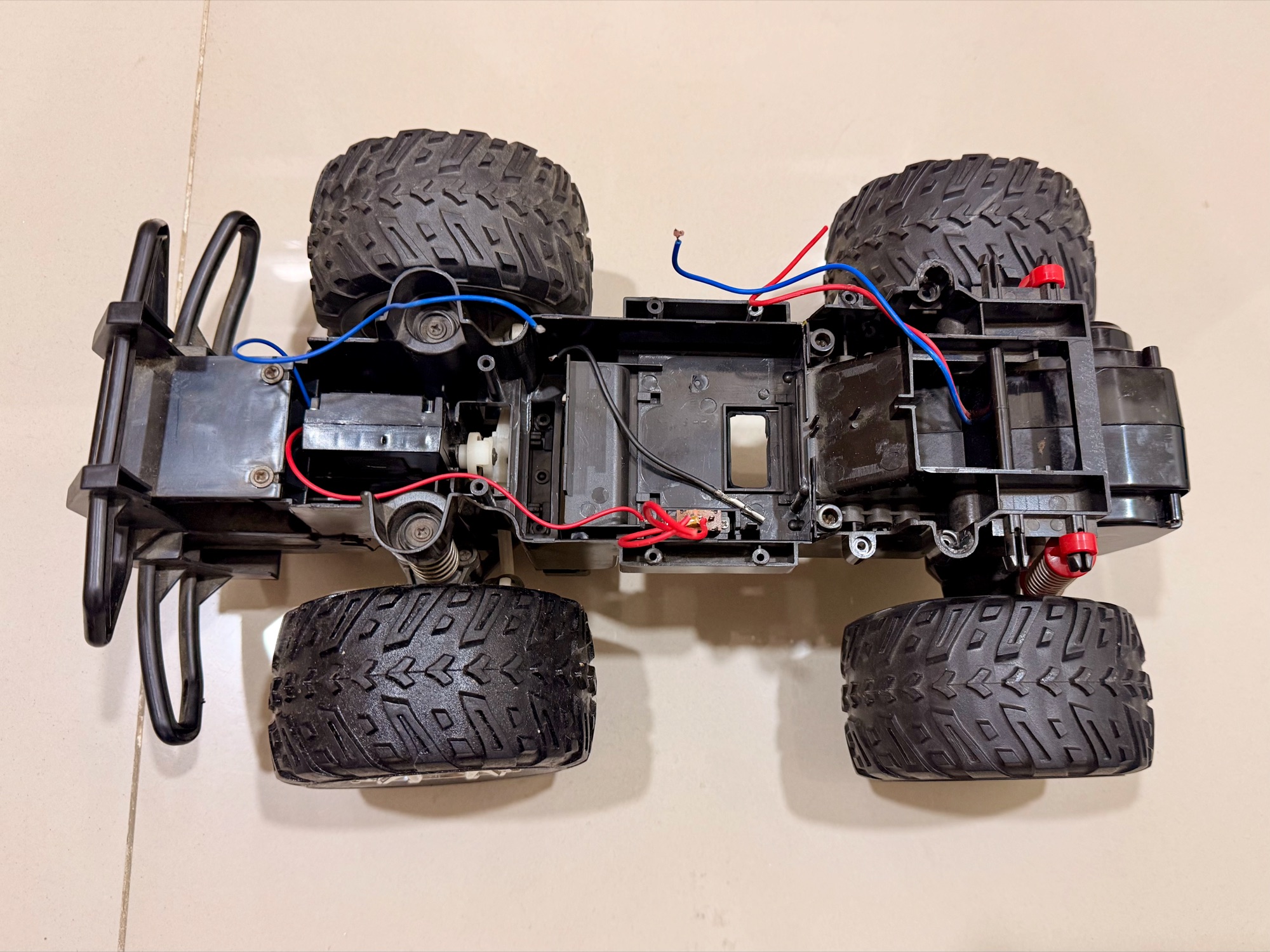
Terrestrial Interface for Dhairya's Intelligence. JARVIS wasn't just running on Tony's computers; it moved things in the real world. Naturally, GOFI needed a body too, and that body came from my almost 10-year-old RC car. I kept the original chassis, drive motors and steering, and gave it a LiDAR head that scans a room in 3D and a Raspberry Pi 5 for a mind.
Why
JARVIS wouldn't have been as cool as it was if it were just a computer program. What GOFI needs is a physical body it can control. Without one it can't go and check whether someone is in a room, or go and tell them something.
How it works
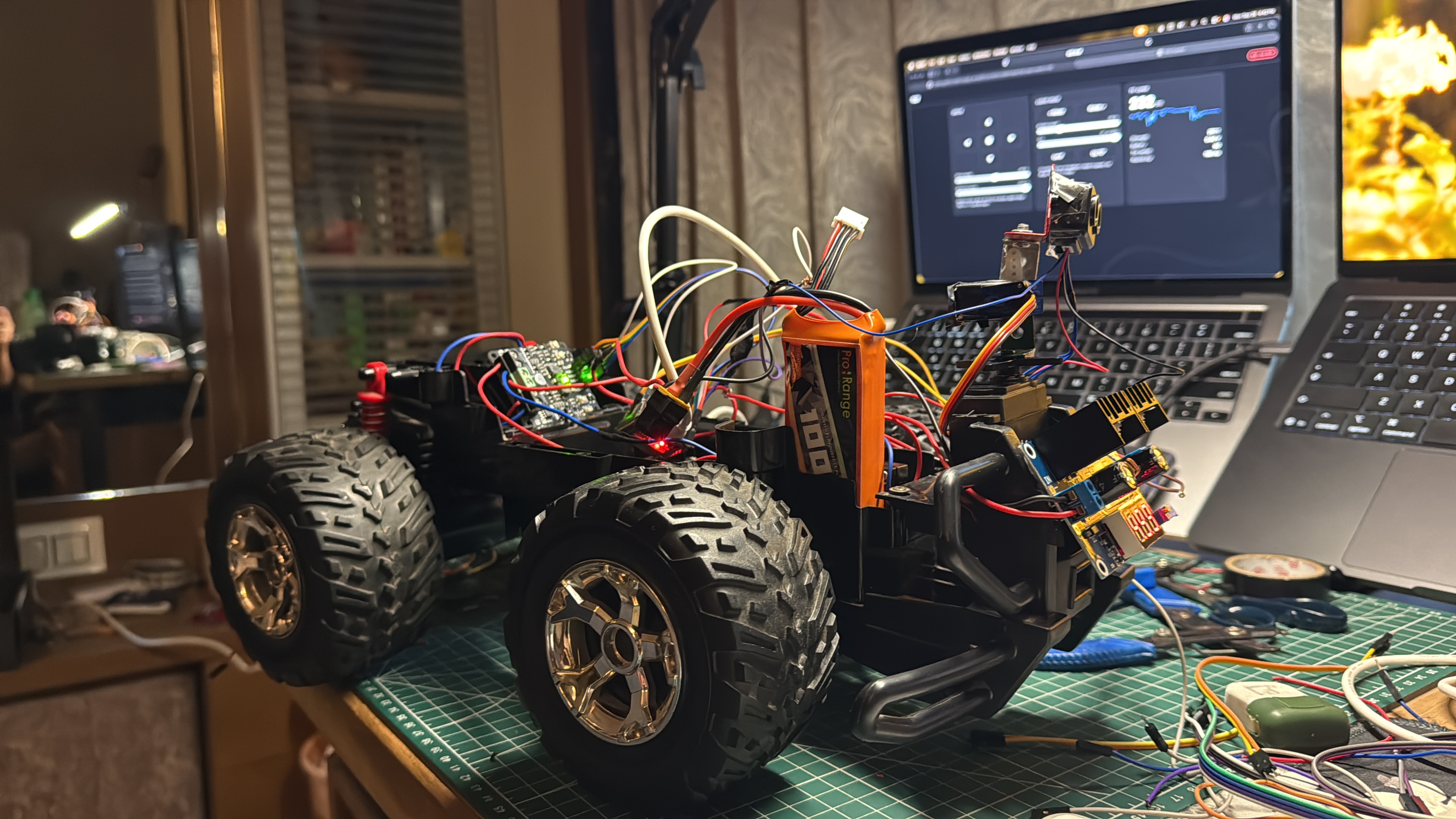
An ESP32 runs the car itself. It drives the two original motors through a Cytron MDD3A, turns and tilts the head, reads the LiDAR, and watches the battery. The motors are rated 9 V, so the firmware caps the PWM to hold them at about 7 V from a 3S LiPo, and if it stops hearing commands for half a second, it stops everything.
The Raspberry Pi 5 sits on top as its brain and talks to the ESP32 over UART. It listens for "TIDI" through a webcam's microphone, with Whisper running on the Pi itself. When it hears its name, it chirps, finds a face with OpenCV, and turns towards it the way a car parks, since it can't turn on the spot. Then it sends what I asked to GOFI and plays the answer back as notes on a buzzer, in a character of its own.
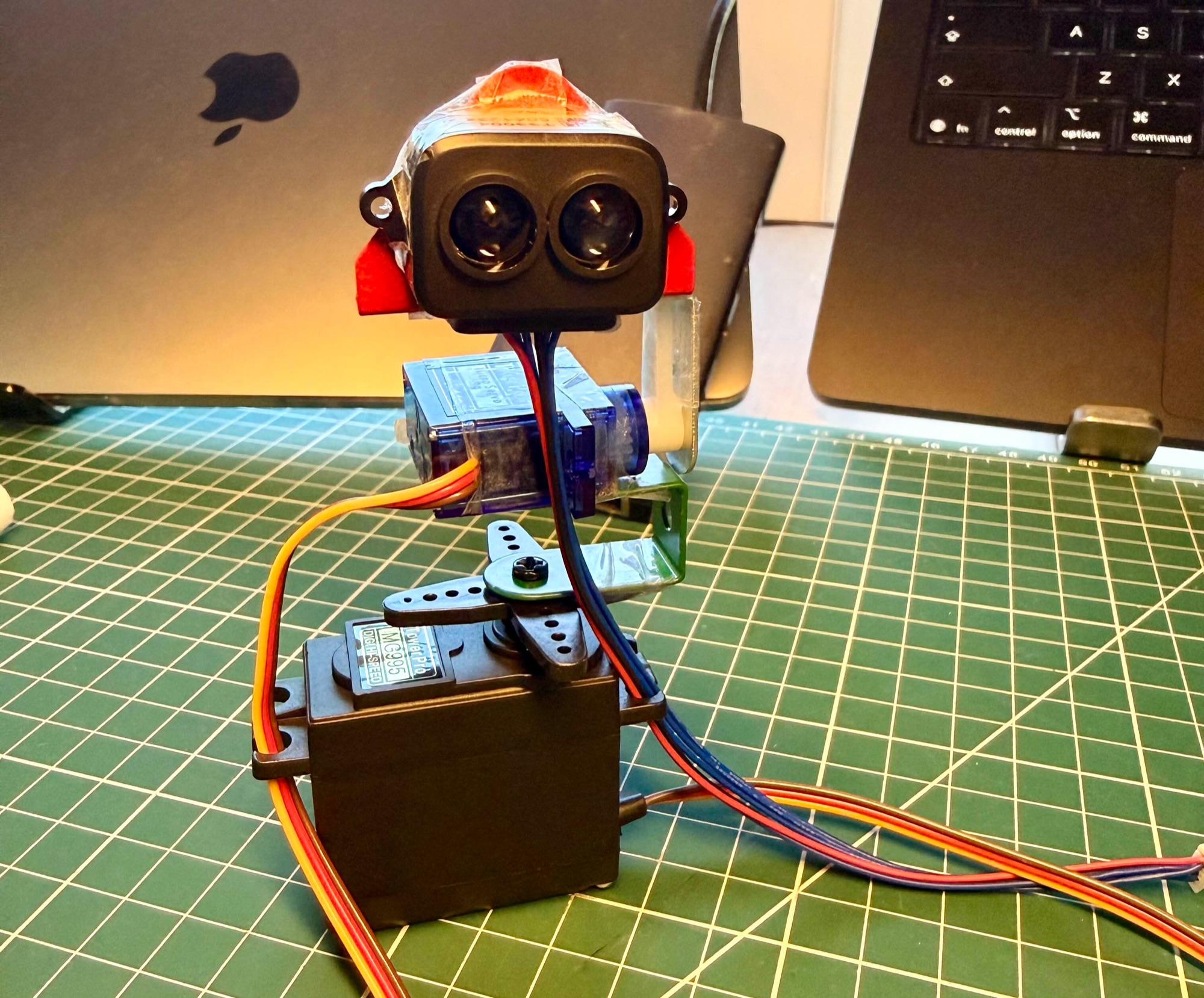
The head is a TF-Luna LiDAR on two MG90S servos, one for tilt and one for azimuth. A room scan sweeps from −90° to +90° in 5° steps and tilts from level to straight up at each one: 703 points, drawn live as a 3D point cloud. With the head facing forward, the same LiDAR doubles as a wall stop: the firmware slows the car from 90 cm and cuts forward drive under 35 cm.
I drive it from GOFI's Mac app or webapp, which shows the camera live, plays the microphone, and has every control. A GPS module on the Pi puts it on GOFI's map.
Where it's at
The hardware's done, and it's on its wheels. The Pi drives the ESP32: it hears its name, turns to a face, asks GOFI and answers in beeps. The code is now public on GitHub too.
I've just swapped the azimuth servo. The old one was a continuous-rotation MG995, so the firmware could only guess where the head was pointing by timing it. Now it's a 180° MG90S set by angle. It gives up the half of the room behind the car, but now it actually knows where it's looking. The GPS is wired too, and it shows a fairly accurate position on GOFI's map.
For an exhibition, I gave it a few tricks of its own that run on the Pi, so they work even if GOFI's server is down. "Go forward to the wall" drives it straight until the LiDAR stops it. "Dance" wiggles, nods, shakes its head and plays a tune. Show mode has it look around, greet faces, scan the room every ten minutes and dance, all without ever turning its wheels. A hall is far too loud for the webcam's mic, so I can also talk to it from my phone or my Mac. To be honest, all of this has only been tested against a stand-in for the ESP32 so far, not on the car itself.
What's left is adding an IMU, and then the software. I want it to combine its IMU, GPS and TF-Luna readings with the camera feed so it can get around on its own and do what I tell it to: go to a room, find someone, tell them something. Only then will GOFI truly reach into the physical world.
The circuit
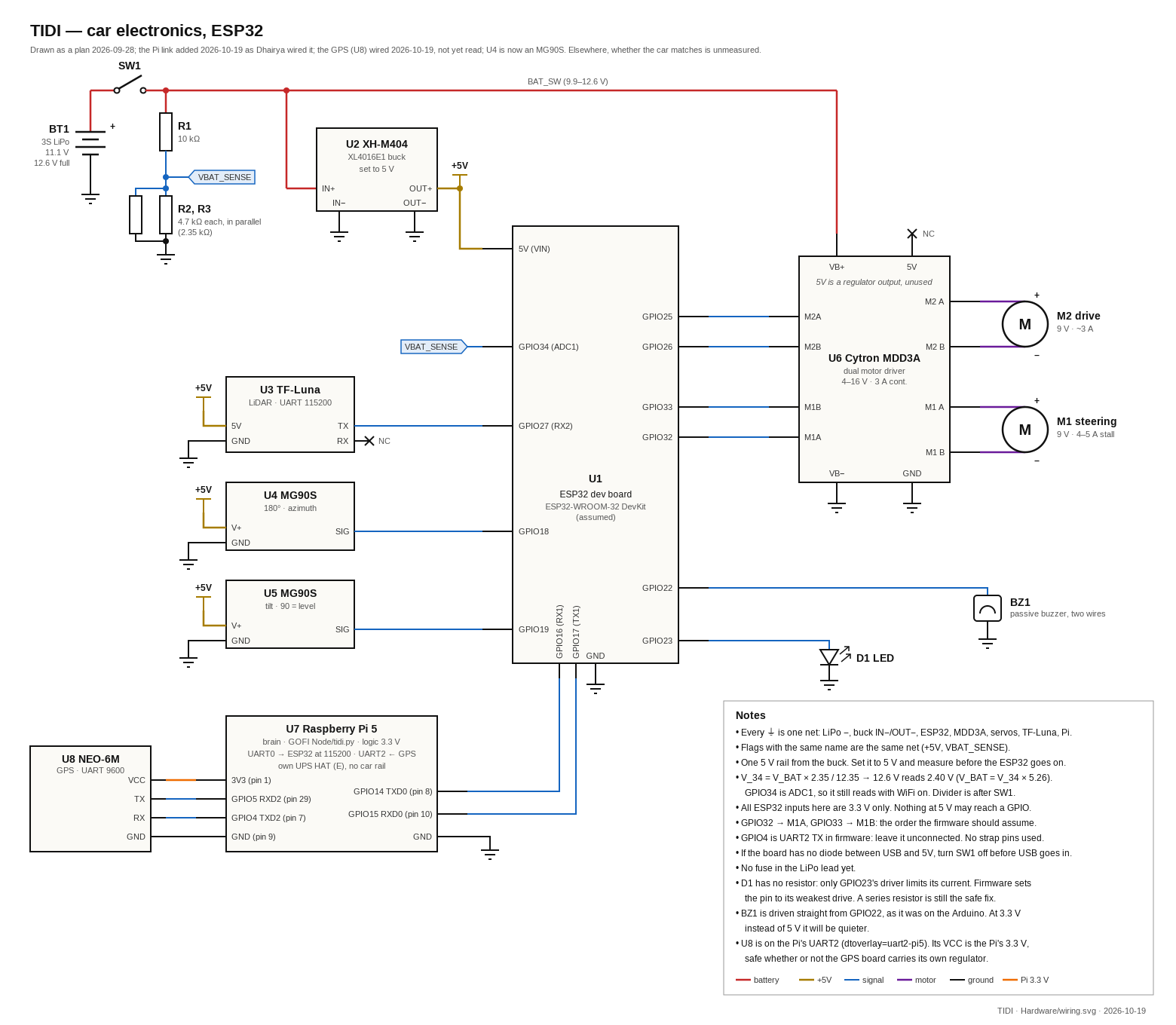

Links
The code, the schematic and the parts list are on GitHub at a-DNA-py/TIDI.